The Wise Parrot – Akbar Birbal Story for Kids
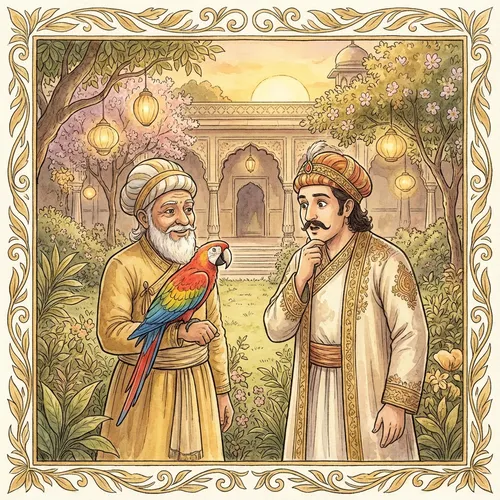
Emperor Akbar had many interests, but one of his favorites was his beautiful pet parrot. This parrot was no ordinary bird; it had bright emerald feathers, a ruby-red beak, and was incredibly intelligent. It could mimic human speech and often entertained the Emperor with funny sayings.
Akbar loved the bird so much that he gave a very strict order to the royal servants. “This parrot is dearer to me than diamonds,” he declared. “If anyone ever brings me news that something bad has happened to my parrot, they shall be punished severely and sent away from the palace forever!”
The servants were terrified. They fed the parrot the finest nuts and fruits and watched over it day and night, dreading the day something might go wrong.
But alas, living things do not live forever. One quiet morning, the parrot, who was quite old, passed away peacefully in his sleep.
The servant in charge of the bird burst into tears. “Oh no!” he wailed. “The parrot is gone! But if I tell the Emperor, he will banish me! What shall I do?”
Trembling with fear, the servant ran to Birbal’s house. “Birbal, please save me!” he begged. “The Emperor’s parrot has left us, but whoever tells him the news will face his wrath!”
Birbal, calm as always, patted the man’s shoulder. “Do not worry,” he said. “Go back to your duties. I will go to the court and speak to the Emperor.”
Birbal went to the palace. He found Akbar in a good mood, listening to music.
“Birbal!” greeted Akbar. “What brings you here so early?”
“Your Majesty,” Birbal bowed low, “I have come to give you a report on your parrot.”
“Ah, my lovely bird!” said Akbar. “How is he?”
“Well,” Birbal began thoughtfully, “he is in a very deep state of meditation.”
“Meditation?” asked Akbar, surprised. “What do you mean?”
“He is sitting perfectly still,” described Birbal. “His eyes are closed in deep thought. He does not move his wings. He does not peck at his food. He does not drink his water. He is completely at peace.”
Akbar frowned. “That sounds very strange. Why would a parrot meditate like a monk? I must see him at once!”
The Emperor rushed to the garden where the golden cage hung. He peered inside. There lay his beloved parrot, still and silent at the bottom of the cage.
Akbar turned to Birbal, his face red with a mix of sadness and anger. “Birbal! You foolish man! Why did you tell me he was meditating? Why didn’t you just tell me he was dead?”
Birbal took a step back and bowed respectfully. “Your Majesty, please forgive me. But do you remember your command? You said that anyone who brought you the news that the parrot was ‘dead’ would be punished severely. If I had used that word, you would have had to banish me! I chose my words carefully to save my own skin, and to let you see the truth for yourself.”
Akbar paused. The anger faded from his face, replaced by a sad smile. He realized that his threat had been foolish and that Birbal had found the only way to tell the truth without breaking the rule.
“You are right, Birbal,” Akbar sighed. “Grief makes us say things we do not mean. No one shall be punished.”
The Emperor mourned his pet, but he also learned a valuable lesson about making fair rules. And the clever servant was safe, thanks to Birbal’s quick wit.
Moral of the Story: Harsh words and rash promises often lead to ticklish situations; wisdom draws a path through them.
More Stories You'll Love
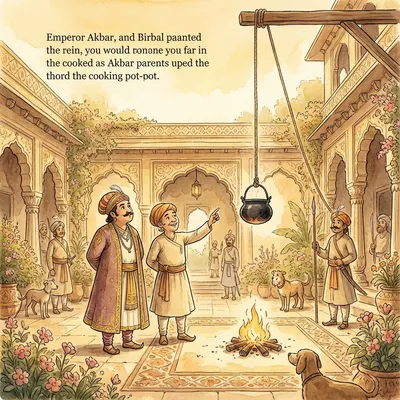
Birbal's Khichdi – Akbar Birbal Story for Kids
A classic story of Akbar and Birbal that teaches the value of fairness and the warmth of hope This is a delightful story for kids with a valuable life lesson.
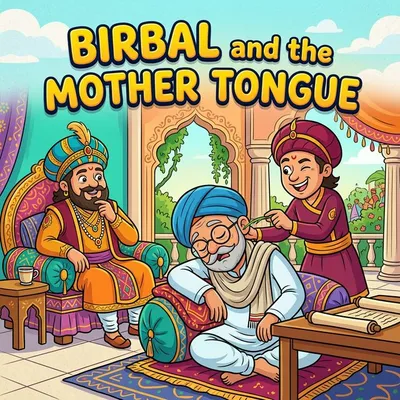
Birbal and the Mother Tongue – Akbar Birbal Story for Kids
A traveling scholar challenges King Akbar's court to guess his true mother tongue. Birbal uses a clever midnight trick to find out the truth!
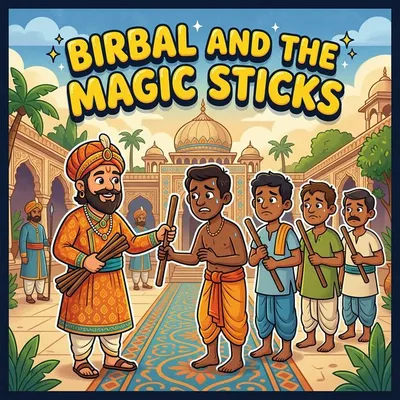
Birbal and the Magic Sticks – Akbar Birbal Story for Kids
When a wealthy merchant's house is robbed, Birbal hands the suspects "magic" sticks that will catch the guilty thief. A story about cleverness and guilt.
Reactions & Comments
Let us know what you think with a reaction!